
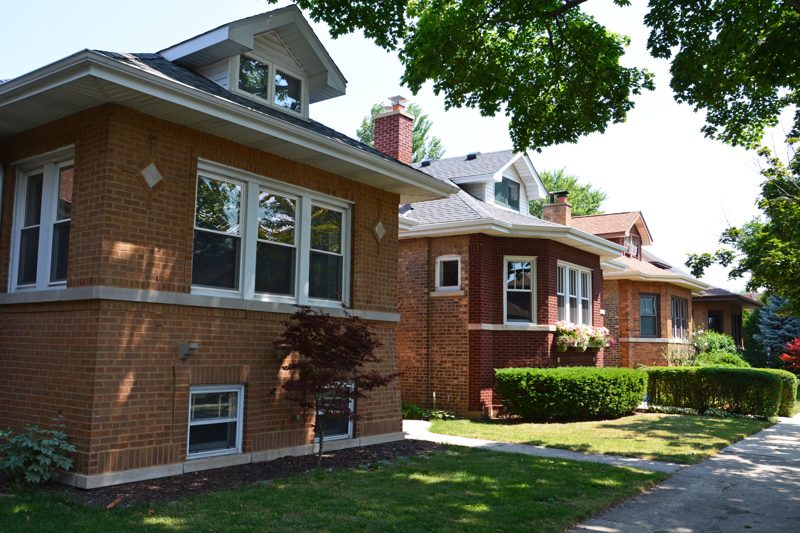
Masonry Waterproofing in Chicago
Brick doesn't leak by itself. Water gets in through failed mortar, cracked crowns, missing flashing and rusted lintels, then freeze-thaw winters break the wall apart. Waterproofing masonry means closing those entry points, not just painting something on the surface.

How Do You Waterproof a Brick Wall or Chimney?
To waterproof a brick wall or chimney, first close the places water gets in: repoint failed mortar joints, repair or replace the crown, and fix flashing at the roof and over openings. Then, where it's appropriate, apply a breathable water-repellent sealer that lets moisture escape. Sealing over bad mortar traps water and makes spalling worse.
Signs Water Is Getting Into Your Masonry
- Damp or stained plaster on the inside of exterior walls or around the chimney
- White powder or streaks (efflorescence) on the brick. → What efflorescence means
- Water in the fireplace or flue after rain. → Chimney leaks
- Spalling brick, with faces popping off after winter
- Peeling paint or musty smells near exterior walls
- Rust stains below steel lintels over windows
Waterproofing Options
| Where water is entering | Fix | When it's the right call |
|---|---|---|
| Recessed or cracked mortar joints | Tuckpointing | The most common source on older Chicago brick |
| Cracked or missing chimney crown | New crown and cap | Water is entering from the top of the chimney |
| Flashing at roof, parapet or chimney | Re-flash, often with a reglet cut into the joint | Leaks show up near the roofline |
| Rusted lintels over windows | Lintel replacement with flashing and weeps | Cracks and rust at window heads |
| Porous but sound brick and mortar | Breathable siloxane or silane water repellent | Only after repairs, and only on masonry that can dry out |
| Parapet walls and copings | Rebuild or recap the parapet | Flat-roof buildings with leaks at the top floor |
What we avoid: film-forming coatings and paints that seal brick shut. They trap moisture behind the face, and the next freeze pops the brick.
What Drives the Cost
- How many entry points need work: one crown vs. several walls of joints
- Height and access, including scaffolding on two- and three-story walls
- Extent of repointing before any sealer can go on
- Flashing and lintel work, which involves removing and relaying brick
- Sealer type and square footage, if a repellent is part of the plan
- Permits for masonry work where the City requires them
You get a written estimate that lists each fix, so you can see what's essential and what's optional. → Cost guide
What to Expect
- 1Find the source. Inside stains are traced to the outside: joints, crown, flashing, lintels.
- 2Photos and a plain explanation of where water is entering.
- 3Written estimate, with repairs listed in priority order.
- 4Repairs first: repointing, crown, flashing or lintel work.
- 5Sealer last, only where it helps and only after mortar has cured.
- 6Cleanup and a walk-through of what was done.
Frequently Asked Questions
Should I seal my brick?
Is masonry waterproofing the same as basement waterproofing?
How long does a water repellent last?
Can waterproofing be done in winter?
More Masonry Services in Chicago


Serving Chicago and the close-in suburbs. See our service area.
Stop Water Before It Gets Behind the Brick
Crumbling mortar lets water in, and Chicago's freeze-thaw winters do the rest. Tell us what you're seeing. Call (773) 389-2576 or send the form.
- Inspection first, with photos of what needs work
- Written estimate before anything starts
- Serving Chicago & Chicagoland