
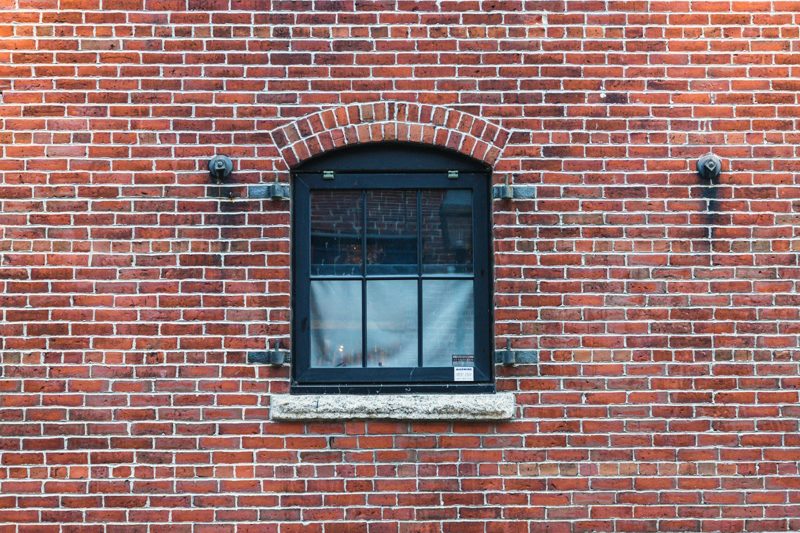
Lintel Replacement in Chicago
The steel angle over a window or door (the lintel) holds up the brick above it. When it rusts, it expands. That process, called rust jacking, pushes the brick up and out and causes cracks.

What Is a Lintel and When Does It Need Replacing?
A lintel is the steel or stone beam that carries the brick above a window or door. It needs replacing when rust makes the steel swell, causing stair-step cracks, bowed brick or a gap above the opening. Replacement means removing the brick above, installing a new lintel with flashing, then relaying the masonry.
Signs of a Failing Lintel
- Horizontal or stair-step cracks running from the corners of windows or doors. → Cracked brick above a window
- Brick above an opening that's bowed, lifted or loose
- Rust staining or visibly flaking steel
- Windows or doors that have started to stick
- Mortar joints at the window head that keep cracking after repointing
Repair or Replace?
| Condition | Option | When it's the right call |
|---|---|---|
| Light surface rust, no cracking | Clean, prime and paint the exposed steel; repoint the joint | Caught early, steel still sound |
| Rust with minor cracks at the corners | Replace the lintel at that opening | Expansion has started moving brick |
| Bowed or lifted brick over the opening | Replace the lintel and relay the brick above | Rust jacking is advanced |
| Stone lintel cracked | Repair, piece in or replace the stone | Greystone and older trim |
| Many openings on one wall | Replace in phases, worst first | Common on older buildings |
Materials
- Galvanized or primed and painted steel angles, sized for the opening and the load
- Through-wall flashing above the lintel, with end dams so water exits instead of soaking the steel
- Weep holes so the flashing can drain
- Matching brick and mortar for the relaid courses
How Lintels Are Replaced
- Brick above the opening is temporarily supported and removed
- The rusted lintel is removed
- A new galvanized or primed steel lintel is set, with flashing and weep holes so water drains out
- Brick is relaid and repointed to match
What Drives the Cost
- Width of the opening and length of the lintel
- How many courses of brick have to come out above it
- Height and access: first floor vs. a third-floor window
- Number of openings done at once
- Brick matching, and any stone sills or trim affected
- Permits for masonry work where required
What to Expect
- 1Inspection of each opening, with photos of rust and cracking.
- 2Written estimate listing every opening in scope.
- 3Window protection, with temporary support set above the opening.
- 4Old lintel out, new lintel and flashing in.
- 5Brick relaid and joints repointed to match.
- 6Cleanup and final photos.
Frequently Asked Questions
Can a rusted lintel just be painted?
Light surface rust can be treated, but once the steel is expanding and cracking brick, replacement is the lasting fix.
Does it affect the window?
The window usually stays in place, but it's protected during the work.
Why did my lintel rust in the first place?
Water. Missing flashing, failed mortar above the opening, or a clogged weep lets water sit on the steel.
Is it urgent?
Not usually an emergency. But rust jacking keeps going, and loose brick over a doorway is a safety issue. Get it inspected before the next winter.
More Masonry Services in Chicago


Serving Chicago and the close-in suburbs. See our service area.
Stop Water Before It Gets Behind the Brick
Crumbling mortar lets water in, and Chicago's freeze-thaw winters do the rest. Tell us what you're seeing. Call (773) 389-2576 or send the form.
- Inspection first, with photos of what needs work
- Written estimate before anything starts
- Serving Chicago & Chicagoland